People ask me this all the time. Friends, coworkers, strangers on the internet who stumble onto the shop.
“Are vintage books actually worth anything? Or is this just a nostalgia thing?”
Fair question. And you deserve a straight answer. Not the breathless “omg yes everything is valuable” take you get from YouTube flippers, and not the snobbish “only serious collectors need apply” brush-off from the rare book crowd.
Here’s the truth. Some vintage books are worth real money. Most aren’t. And knowing the difference is the whole game.
Let's Start With What "Worth" Actually Means
Before we talk numbers, we need to separate two things people constantly mix up.
Financial worth is what you can actually sell it for. Cold, hard market value.
Personal worth is what it means to own it. The atmosphere. The history. The feeling of holding something printed before you were born that has outlasted everyone who originally touched it.
Both are real. Both matter. But they’re not the same thing, and confusing them is how people end up disappointed.
A beat-up 1970s paperback might have zero resale value and still be one of the best additions to a Dark Academia shelf you ever make. Conversely, a pristine first edition might be worth $200 to a collector and feel like nothing special to you personally.
Know which kind of worth you’re chasing before you spend a dollar.
The Honest Market Reality
Here’s what the vintage book market really looks like, stripped of all the romanticism.
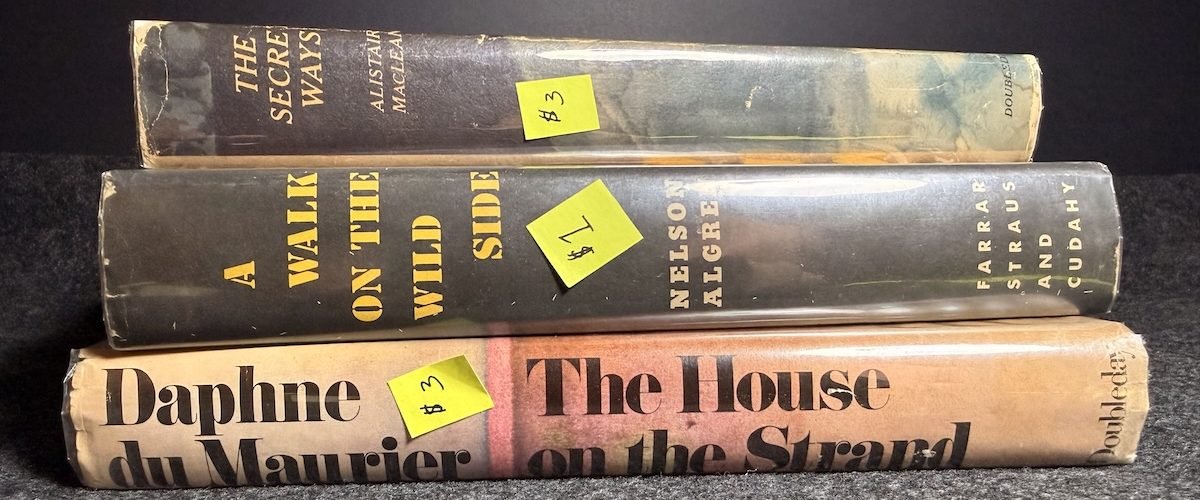
The vast majority of used books, even old ones, are worth between $1 and $10. Full stop. Most hardcovers from the 1960s through the 1980s, even in decent condition, fall into this range.
They’re not rare. They printed a lot of books. People kept them.
The books that jump into real money share a specific combination of factors. First edition status, intact dust jacket, good to fine condition, and genuine collector demand for that particular title or author. When all four align, you can see $50, $100, and $500. Even more for the right book.
But that combination is rarer than people think. And condition is the killer. A first edition without its dust jacket loses 60 to 80 percent of its value overnight. A first edition with a torn, faded, or missing jacket? Nice shelf decoration. Modest resale value at best.
This isn’t discouraging. It’s actually useful, because it means the people who do know what they’re looking at find genuinely valuable books all the time at estate sales, priced like they’re worthless.
The Authors and Eras That Pay
Not all vintage books are created equal. There are categories where collector demand is real, consistent, and growing.
Literary horror from the 1970s and 80s is probably the strongest market for what I focus on. Stephen King first editions are the obvious example. A true first of The Shining or Carrie in fine condition with a clean dust jacket can fetch hundreds or thousands of dollars. But it goes well beyond King. Peter Straub, Richard Matheson, Shirley Jackson — serious collector demand, and the books are still findable at estate sales if you know what to look for.
Gothic fiction and classic dark literary novels hit the sweet spot for Dark Academia collectors specifically. Daphne du Maurier, Mervyn Peake, early Anne Rice. These command real prices from buyers who want authentic vintage editions, not modern reprints.
Science fiction from the 60s and 70s has a dedicated collector base, too. The ambitious, literary kind. Ursula K. Le Guin, Philip K. Dick, Frank Herbert. First editions of landmark titles are legitimately valuable.
The pattern you’re noticing is that it’s not just any old book from those decades. It’s the right authors, the right titles, in the right condition.
What Makes a Vintage Book Worth Real Money
Five factors. Every single one matters.
First edition status. Not just “old” — specifically the first printing of the first edition. This is where most casual collectors get burned. Book club editions look almost identical to trade firsts and are worth a fraction of the price. Learning to tell them apart is the single most valuable skill in this hobby.
Dust jacket condition. No dust jacket means dramatically reduced value. A near-fine first edition with a pristine dust jacket is twice as valuable as the same book without one. It’s often five or ten times as valuable. Protect the jacket.
Overall condition. Collectors grade on a scale from Poor to Fine. Very Good is the minimum most serious buyers want. Foxing (those brown spots), water damage, broken hinges, writing inside — all of these drop the value, sometimes to nothing.
Author and title demand. A first edition of a forgotten mid-list novelist from 1974 is just an old book. A first edition of a beloved or culturally significant author in the same year is a collectible. The market decides, not sentiment.
Provenance and signatures. A signed copy from a desirable author adds value, sometimes a lot. But “signed” means actually signed by hand, not a facsimile signature printed by the publisher. Know the difference before you pay a premium for it.
The Part Nobody Tells You
Here’s what I’ve come to believe after spending weekends digging through estate sales across Northern California.
The financial upside is real for the people who learn the game. I regularly find books priced at $2 to $5 that sell for $30 to $100. That math works, and it works because most people don’t know what they’re looking at.
But the collectors who stick with this long-term aren’t primarily chasing returns. They’re chasing the hunt itself. The particular satisfaction of spotting a first edition dust jacket across a crowded room. The weight of a well-made hardcover from 1968 in your hands. The story behind the book and the person who owned it before you.
That’s what a shelf full of vintage books gives you that a shelf full of modern reprints doesn’t. Atmosphere. History. Objects with a past.
If that resonates with you, vintage book collecting is absolutely worth it, regardless of what any individual book appraises for.
If you’re purely looking for an investment vehicle, go buy index funds. Vintage books can appreciate, but they’re unpredictable, illiquid, and condition-sensitive in ways that make them a terrible financial instrument.
Collect because you love the things. The money, when it comes, is a bonus.
How to Start Without Getting Burned
A few hard-won principles if you’re just getting into this.
Buy condition first. A lesser title in fine condition beats a desirable title in poor condition almost every time for resale. For personal use you get to decide, but don’t overpay for a damaged book hoping the title carries it.
Learn first edition identification before you spend serious money. Seriously. Read this post first. It will save you from the most common and expensive mistake new collectors make.
Start with what you love. If you’re drawn to Dark Academia, buy the books that fit that aesthetic and that you’d want on your shelf even if they never appreciated a dollar. The learning curve is a lot more fun when you’re building something you actually care about.
Don’t skip estate sales. This is where the real finds are, priced by people who don’t know what they have. Thrift stores increasingly do know, and they price accordingly. The estate sale, the box in the corner, the shelf nobody’s touched — that’s your hunting ground.
The Bottom Line
Are vintage books worth collecting?
Yes, if you love books, enjoy the hunt, and are willing to learn enough to tell a first edition from a book club edition. The financial upside is real for the informed buyer. The personal value is real for anyone who appreciates what these objects actually are.
No, if you’re expecting a simple, reliable investment. It doesn’t work that way. The market is specialized, condition matters enormously, and most old books aren’t worth much.
The collectors I respect most aren’t the ones who’ve made the most money. They’re the ones who’ve built shelves that tell a story, who can pick up any book they own and tell you exactly where they found it and why it matters.
That’s the kind of collection worth building.
Want to know exactly which vintage books to start with?
Download the free guide, The Dark Academia Starter Library: 20 Essential Vintage Books Under $20, what to look for when buying, and how to avoid the most common collecting mistakes. It’s the starting point I wish I’d had.
Rob spent two years in the archive stacks at UW’s Suzzallo Library. It wrecked him for normal books. He now hunts first editions at estate sales across Northern California, specializing in Dark Academia, literary horror, Gothic fiction, and classic science fiction from the 1960s–1980s.